
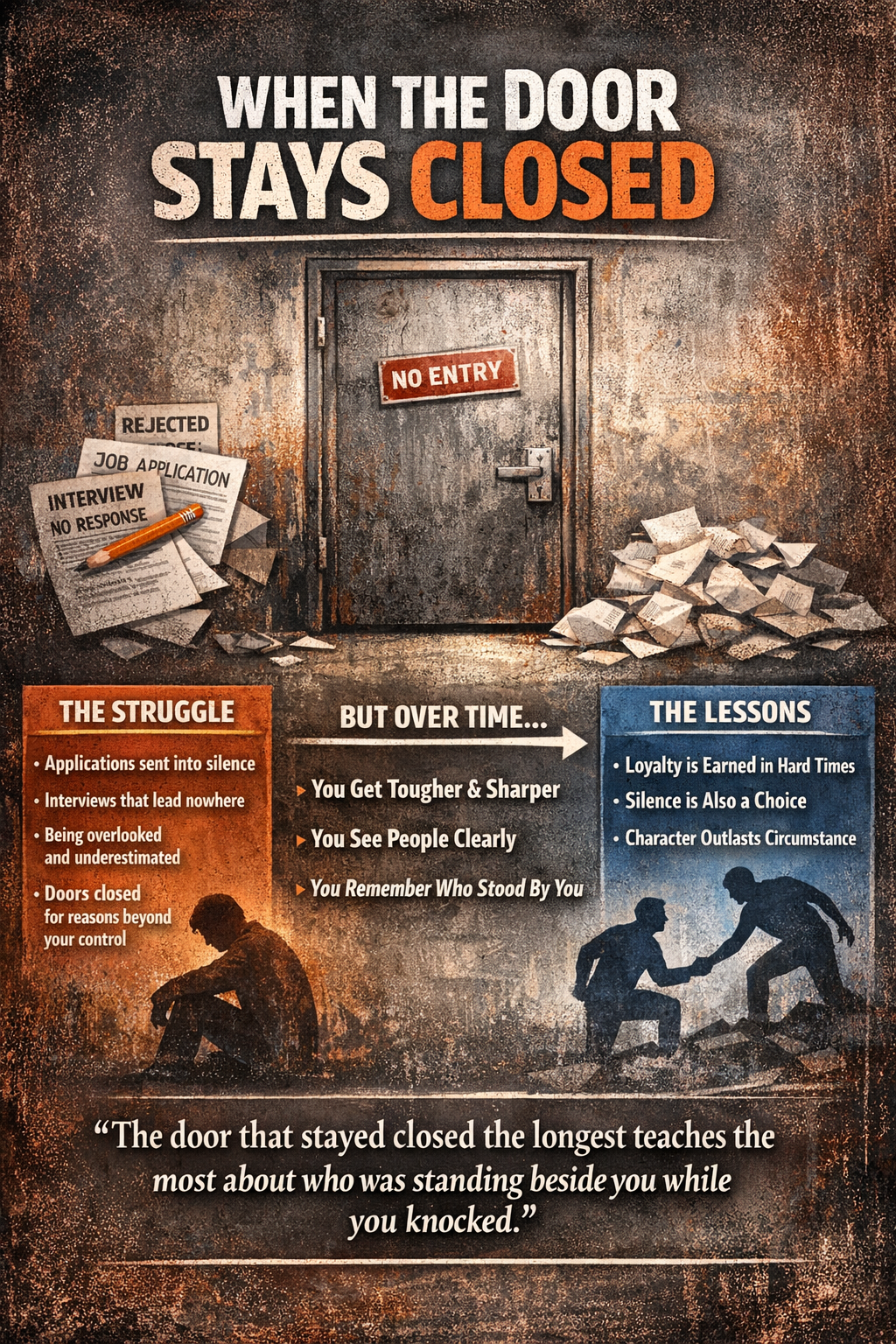

There's a particular kind of exhaustion that comes not from working too hard, but from trying too long with nothing to show for it. Sending applications into silence. Getting through interviews only to be ghosted. Watching doors close not because you weren't qualified, but because of your age, your reputation by word of mouth, or simply because someone with influence decided they didn't like your presence. That kind of rejection doesn't just sting — it accumulates.
And the people who haven't lived it tend to have opinions about it.
It's easy to assess someone's situation from a comfortable position. When you have a paycheque, a title, and a network that returns your calls, struggle looks like a choice. It's easy to wonder why someone "can't just find something" when you've never spent months doing exactly that with nothing coming back. Judgment is cheap when you're on the right side of the fence. Understanding costs more — and most people won't pay that price until they're standing where you are.
So here's what actually happens to someone who survives that stretch.
They get harder. Not bitter necessarily, but clear-eyed in a way that comfort never produces. They stop confusing proximity for loyalty. They learn quickly who showed up and who quietly stepped back and pretended not to notice. That distinction doesn't fade. It doesn't get forgiven and forgotten the moment things improve. It gets filed away — permanently.
Because here's the reality: when someone finally lands back on their feet after a long, grinding period of being overlooked and underestimated, they remember everything. Every person who vouched for them, passed along a lead, checked in without being asked, or simply acknowledged their situation honestly — those people become permanent allies. The loyalty runs deep because it was earned in hard conditions, not easy ones.
The same memory applies in reverse.
The colleagues who once shared trenches with someone and then conveniently looked the other way when that person fell on hard times — they don't get a clean slate either. Not out of spite, but out of simple human nature. People remember who was there and who wasn't. And when the field shifts, as it always eventually does, and the person who was left out in the cold finds their footing again, the dynamic changes. The reinforcements arrive on a different side of the battlefield.
None of this is about revenge. It's about the long view.
The professional world has a short memory for accomplishments and a long one for character. How someone treats a peer when there's nothing to gain from it says more about them than any title or track record. The people who stayed silent during someone else's struggle made a choice — and that choice was seen, noted, and remembered.
So if you're in that place right now — ghosted, overlooked, underestimated, aging out of opportunities that should have been yours — know this: the version of you that comes out the other side is sharper than the one that went in. You'll know exactly who your people are. And you'll carry that knowledge forward in every room you walk into.
The door that stayed closed the longest teaches the most about who was standing beside you while you knocked.
#Resilience #CareerComebacks #ProfessionalGrowth #Unemployment #WorkplaceReality #LeadershipMatters #TrueAllies #NeverForgetWhoShowedUp