
Raid Leaders Are Real Leaders: Why Companies Should Hire
World of Warcraft Players
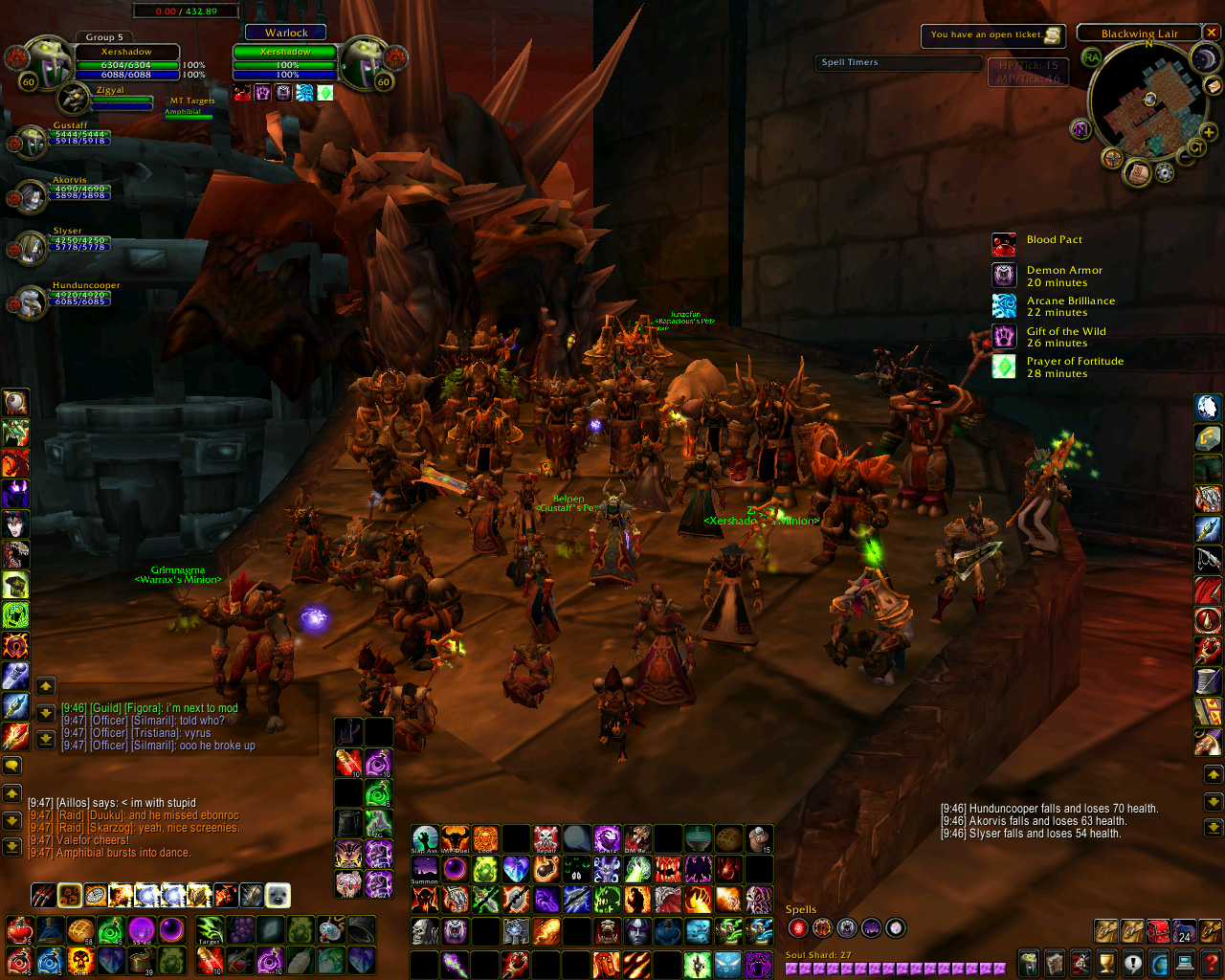
2004 and leading 40 people
Some people think World of Warcraft is where productivity goes to die. But the truth is it's where some of the most capable leaders in your candidate pool learned their craft - and I know this because while my workmates and friends were doing the everyday grind, I was managing 40-person multinational teams through challenges that would make most middle managers pee their pant.
At 32, I logged into WoW at night and led teams from Canada, USA, Brazil, South Korea, and Finland (to name a few) through dungeons we'd never seen. Within two years, I reached top the 100 among 6 million active players as an undead destruction warlock. That demanded strategy, cross-cultural communication, and resilience - the exact qualities Gartner's 2024 survey identified when 27% of HR professionals ranked leadership development as their top priority.
Before you dismiss this as basement-dwelling talk (perfectly respectable bedroom, thank you), consider: Research published in Human Resource Development International confirms that online gaming develops problem-solving, teamwork, leadership, and self-confidence - the same competencies companies desperately cultivate through expensive programs that mostly teach people how to nod thoughtfully during PowerPoint presentations.
Boss Fights Beat Business School
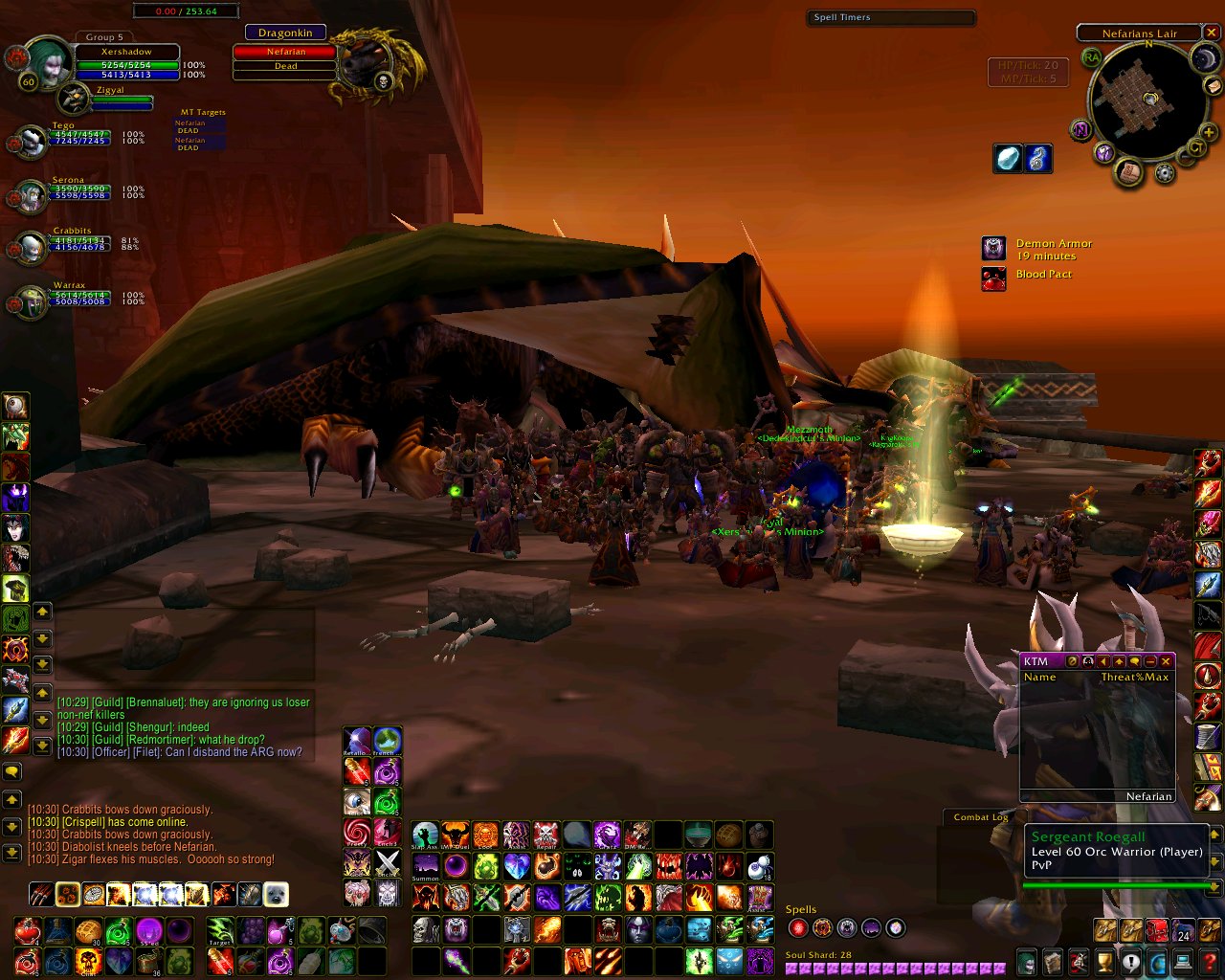
To non-gamers, Molten Core or Blackwing Layer mean nothing. To us, they were complexity gauntlets mirroring business challenges - with one difference: raid bosses are more honest than stakeholders about their mechanics.
Each encounter punished different mistakes. One boss hits you for standing too close (clearly designed by someone who experienced open-plan offices). Another required precise attack sequences while managing environmental hazards. No universal playbook. Just environmental analysis, adaptive strategy, and leading teams through unfamiliar mechanics.
Sound familiar? Client work operates identically. Advising Coca-Cola on supply chains one week, Pfizer on R&D the next. Both demand synthesizing incomplete information, coordinating specialists, and adjusting strategy based on live feedback - not skills you learn in a weekend workshop where staying awake after lunch is the hardest challenge.
What Consulting Firms Can Learn from Dungeon Parties
The Five-Person Formula
In dungeons, the smallest unit is five people: tank, three damage dealers, healer. This maps perfectly to corporate structure. The tank shields the team like a partner managing client pressure. Damage dealers deliver output like associates providing analysis. The healer sustains everyone like the analyst building models that hold engagements together.
Any role failure collapses the team. Anyone who's wiped knows: one weak link undermines everyone. You learn leadership isn't about being the hero - it's ensuring everyone executes effectively. Most managers grasp this only after failing their first team. Gamers learn it at 16, defeating Onyxia on their third attempt, when the only consequence is trying again.
Managing Complexity in Real Time
Systems Thinking Under Fire
A raid leader simultaneously tracks boss mechanics, monitors 40 health bars, watches for hazards, calls positioning changes, and adjusts strategy in real time. This isn't multitasking - it's systems thinking under pressure.
University of Houston research confirms these skills translate directly to organizational management. The difference? Gamers practice nightly for years, developing pattern recognition and rapid decision-making. Most managers learn post-promotion, which explains why first-time managers look like they're being hunted for sport.
Teamspeak was one of the early voice communication software tools Raid Leaders used to try and coordinate with their Teams in Raids or Dungeons.
It was not efficient and it was not the best sound quality. Made it near impossible for more then one person to talk at a time and with the bandwidth of the day had other challenges.
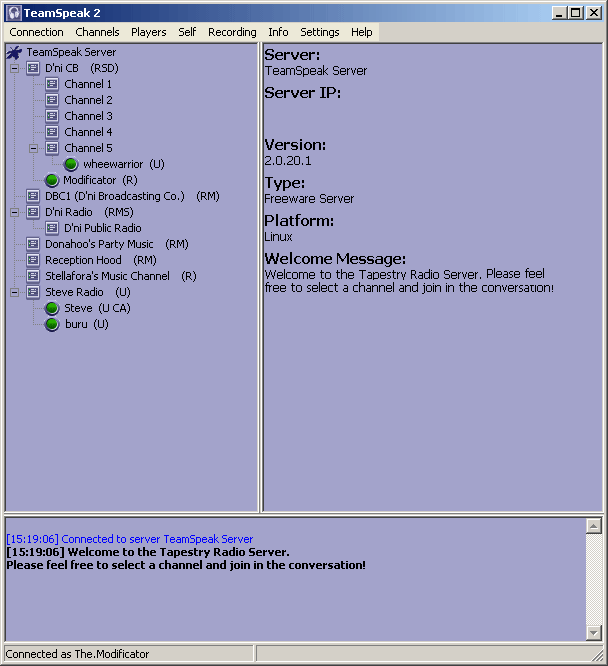
If your Team or Raid managed to not lose voice communication between bandwidth bottle necks and slow speeds it was a miracle.
Just added a different level to 'Leadership' but you made it work to keep 40 people on task to the end result.
The sound quality in TS2 is primarily determined by the server's codec and bitrate settings, which could be configured by the server administrator.
- Codec Options: TS2 offered a variety of codecs (Speex, GSM, WinCELP, CELP) with varying levels of quality and bandwidth usage.
- Bitrate and Bandwidth: The available bitrates were significantly lower than modern standards. For example, the highest quality Speex codec (
Speex 25.9) used about 25.9 kbps, which was considered the best for music transmission at the time, while the lowest quality (Speex 3.4) was suitable for very low-bandwidth connections like modems. The quality could be adjusted for different internet connections (DSL/Cable, ISDN, Modem). - Configuration:
Users and administrators could adjust sound input/output settings,
including enabling or disabling automatic gain control (AGC), echo
reduction, and push-to-talk (PTT) to optimize their audio experience.
- User Capacity: Server limits were more dependent on the server hardware and available bandwidth than internal software limitations. Server administrators had control over the number of user slots they offered.
- Bandwidth Efficiency: The software was known for its ultra-low latency and low resource usage, making it a popular choice for gaming communities with limited bandwidth capabilities.
- Control and Customization:
A key philosophy of TeamSpeak, even in TS2, was that the server owner
had complete control over their server, including codec choice and
quality settings, rather than being forced into a centralized set of
defaults.
Failing Fast (The Fun Version)
Take Kel'Thuzad in Naxxramas. First attempts guaranteed failure. Teams wiped repeatedly before finding rhythm. Leaders analyzed, reassigned, refined: wipe, learn, adjust, repeat.
That's modern business strategy - except raid failures don't require 90-minute retrospectives about "lessons learned." You just try again, immediately, with better information.
Traditional training misses this: raid leaders develop skills under actual pressure with immediate, honest feedback. Your strategy fails, everyone knows. Can't communicate under pressure? The raid wipes. No corporate politeness - just clear cause and effect and someone typing "gg" or "QQ" in chat, which somehow stings more than any performance review.
Why Introverts Make the Best Remote Leaders
The Introvert Advantage
The best guild leaders were rarely the loudest. They listened, synthesized, and guided distributed teams without dominating conversations. They read rooms and held groups together across time zones and languages.
Corporate life underestimates these qualities. We're stuck on the myth that leadership looks like a TED Talk - charismatic, extroverted, commanding. But the future of work - global, hybrid, digital - favors the opposite.
Gaming research confirms online play develops communication alongside problem-solving, giving introverts a competitive edge. Coordinating 40 people across five continents requires clarity and consistency, making everyone feel valued despite never meeting face-to-face. You read tone through text, mediate cross-cultural conflicts, and maintain cohesion through setbacks.
Sound like remote management? That's because it is. Except raid leaders have done it since 2004, while most companies still figure out how to use Slack without creating 47 channels for one project.
Not Every Gamer Is a Leader (But Stop Ignoring the Ones Who Are)
To Be Sure - Not every gamer is a secret management genius, just like not every MBA knows how to lead, and not every person quoting The Art of War understands strategy (most just saw it on LinkedIn).
The point isn't that gaming automatically creates leaders. It's that high-level gaming can develop the same competencies organizations spend billions teaching - and we're systematically ignoring this experience because it lacks a business school certificate.
A guild leader who coordinated 40 people across six time zones to execute complex strategies has demonstrable leadership experience. Whether that happened in a conference room or virtual raid shouldn't matter - but it does, and that's the problem.
(Raid Leader and Former Guild Master of 3 Guilds to Date since 2004)
Time to Recruit Your Raid Leaders
Companies are overlooking a ready-made leadership pipeline while spending $60 billion annually trying to create one. The introverted ex-gamer who spent five years leading cross-continental raid teams has demonstrable experience in remote coordination, complex problem-solving, and performance optimization under pressure.
These aren't theoretical skills from a training module. They're battle-tested competencies developed through thousands of hours of practice.
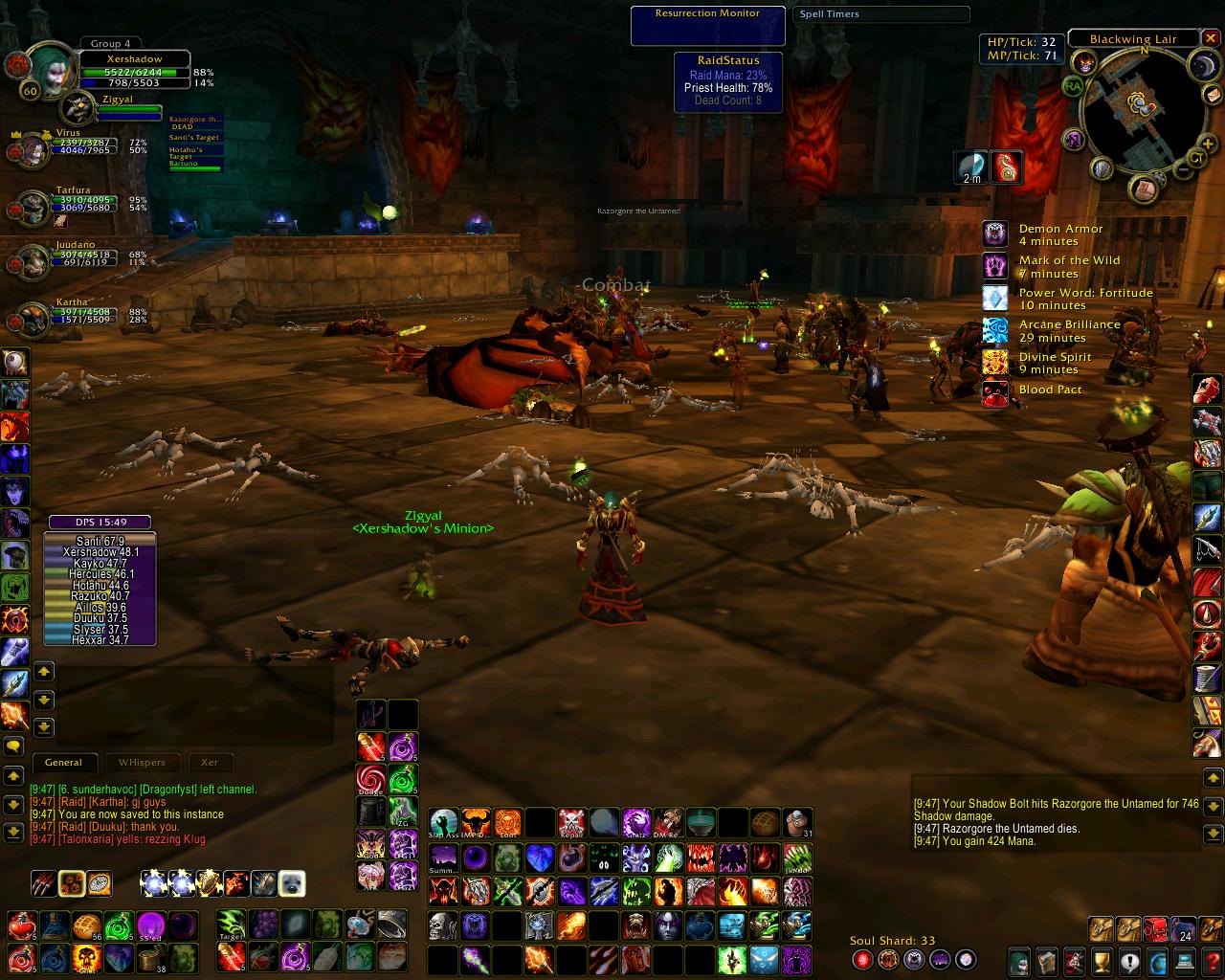
The raids of yesterday trained the leaders businesses need tomorrow.
It's time to stop underestimating them - and start recruiting them.
It's time to stop underestimating them - and start recruiting them.